The Problem
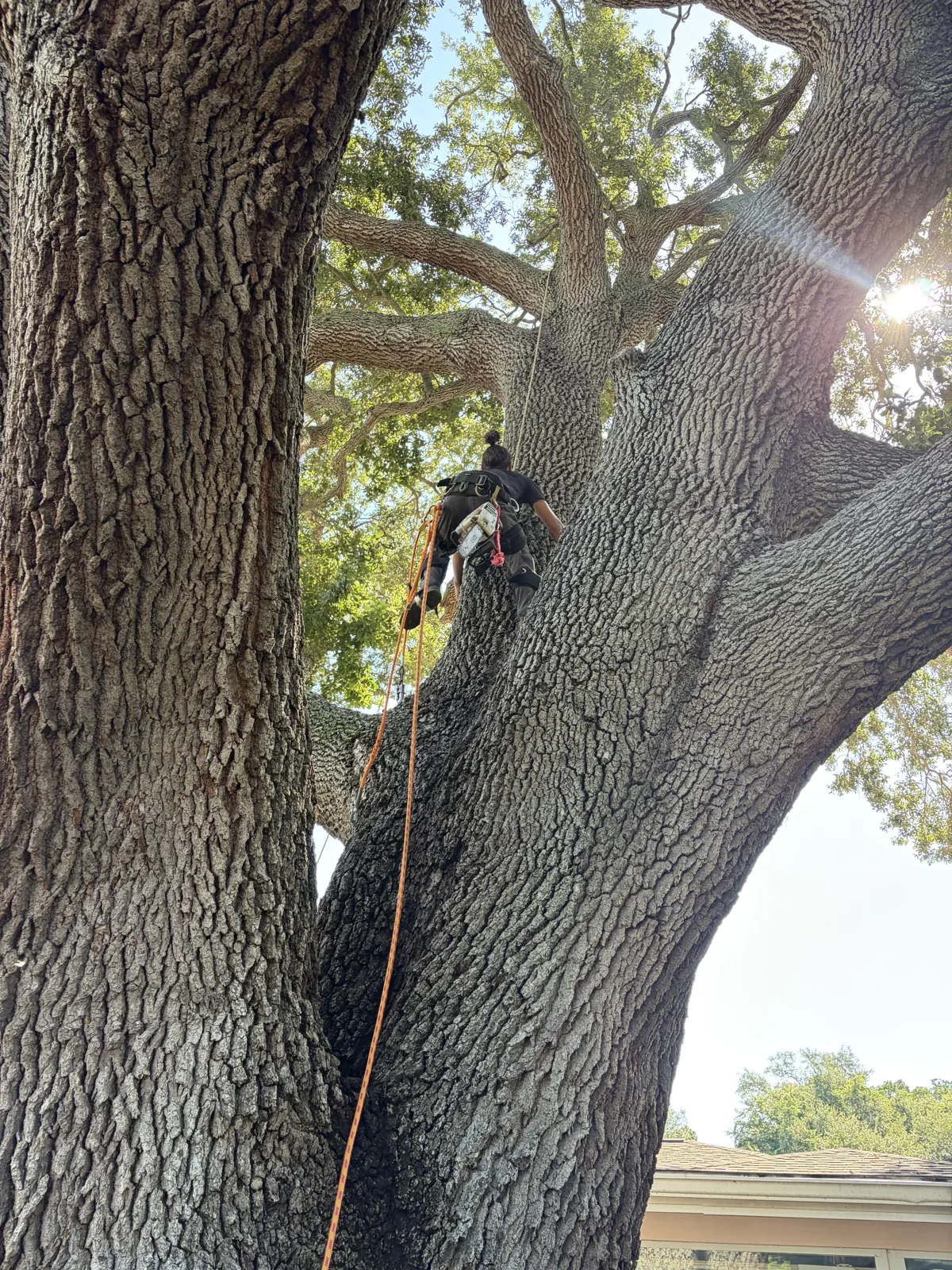
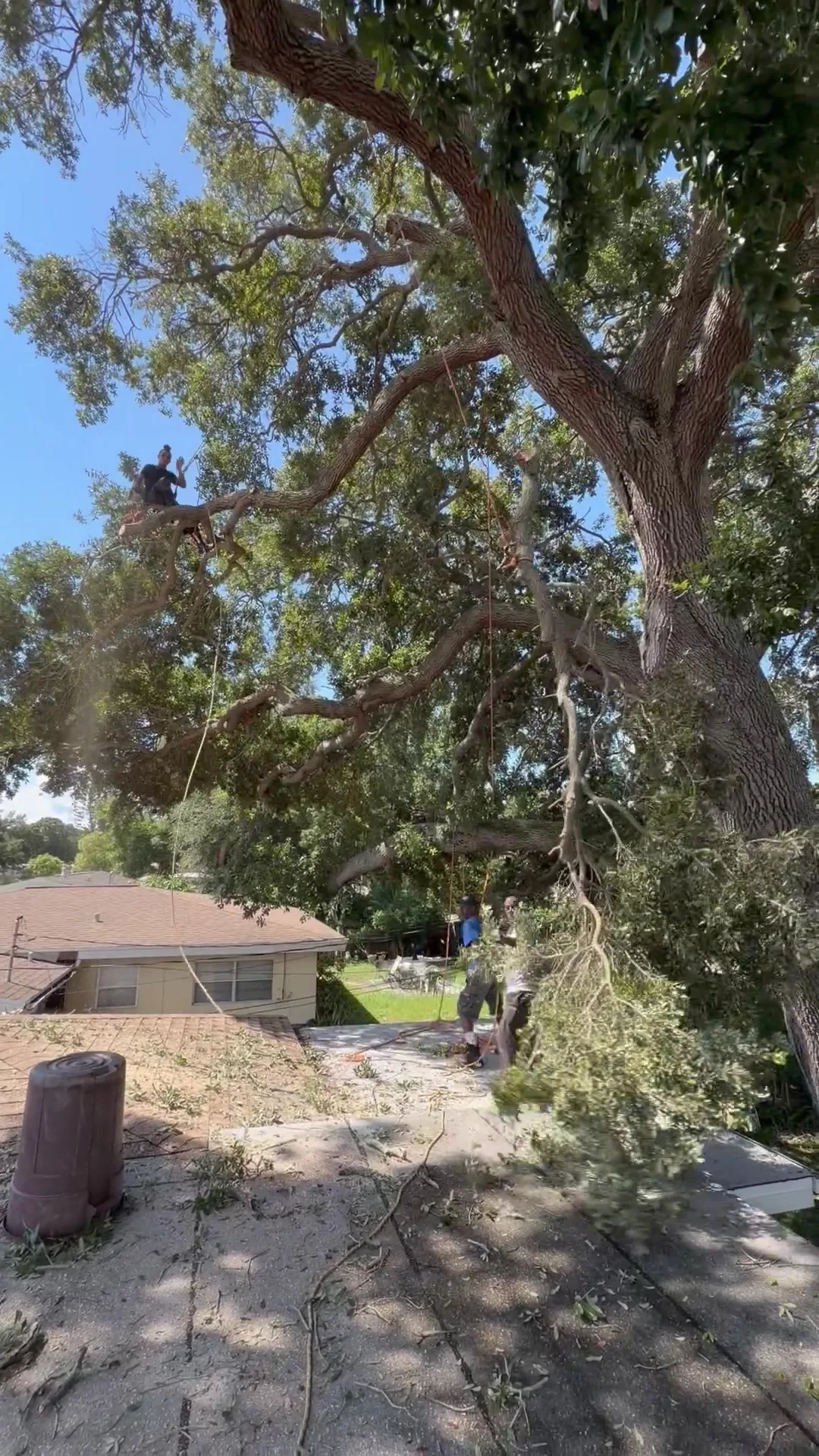
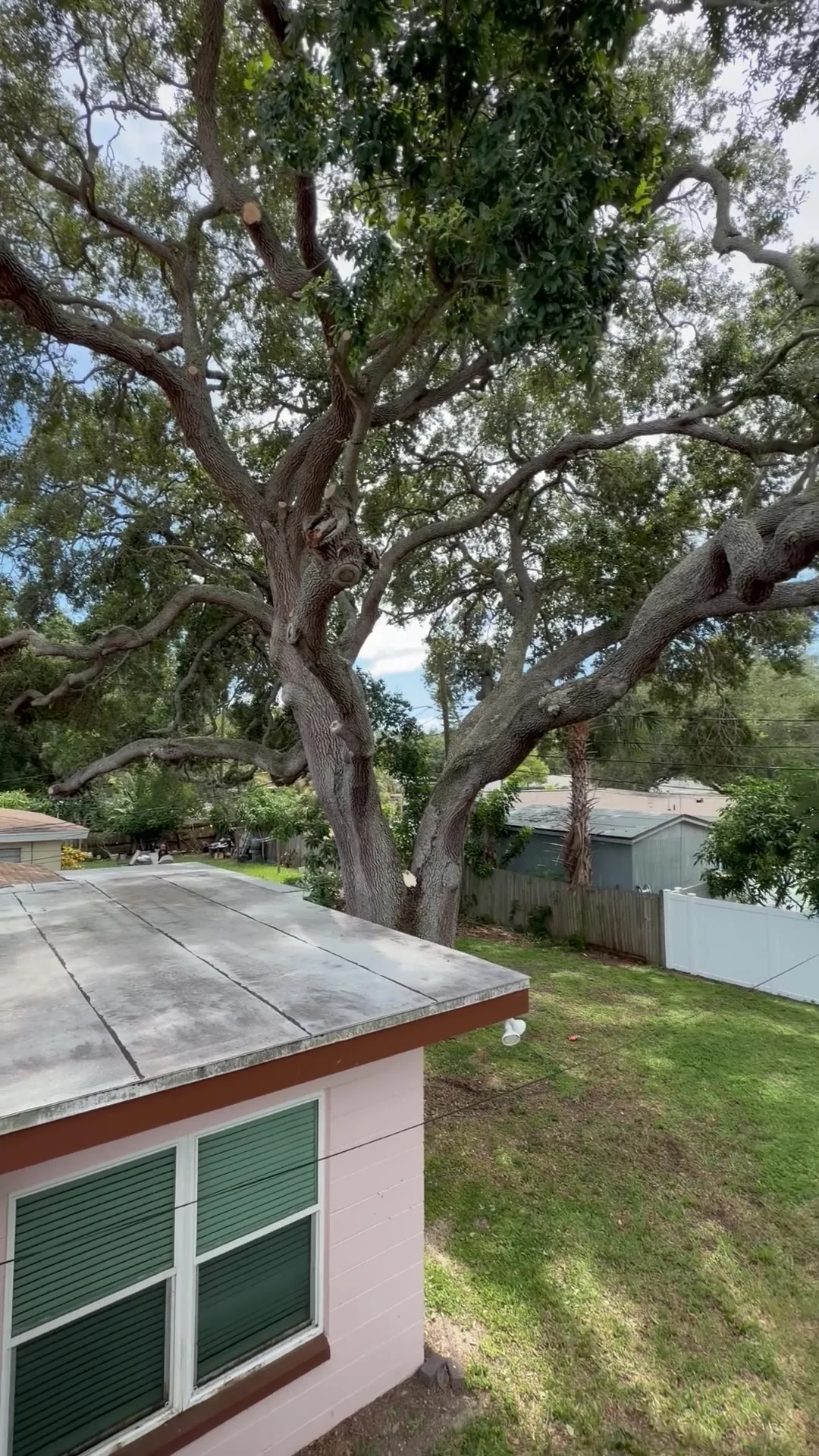
A mature live oak had spread its canopy directly over the roof of a single-story home. Several large limbs were resting within a few feet of the shingles, and the homeowner wanted them gone before storm season. Dropping limbs that size from that position is not an option when a house is underneath — every cut has to be controlled.
Why This Job Needed Rigging
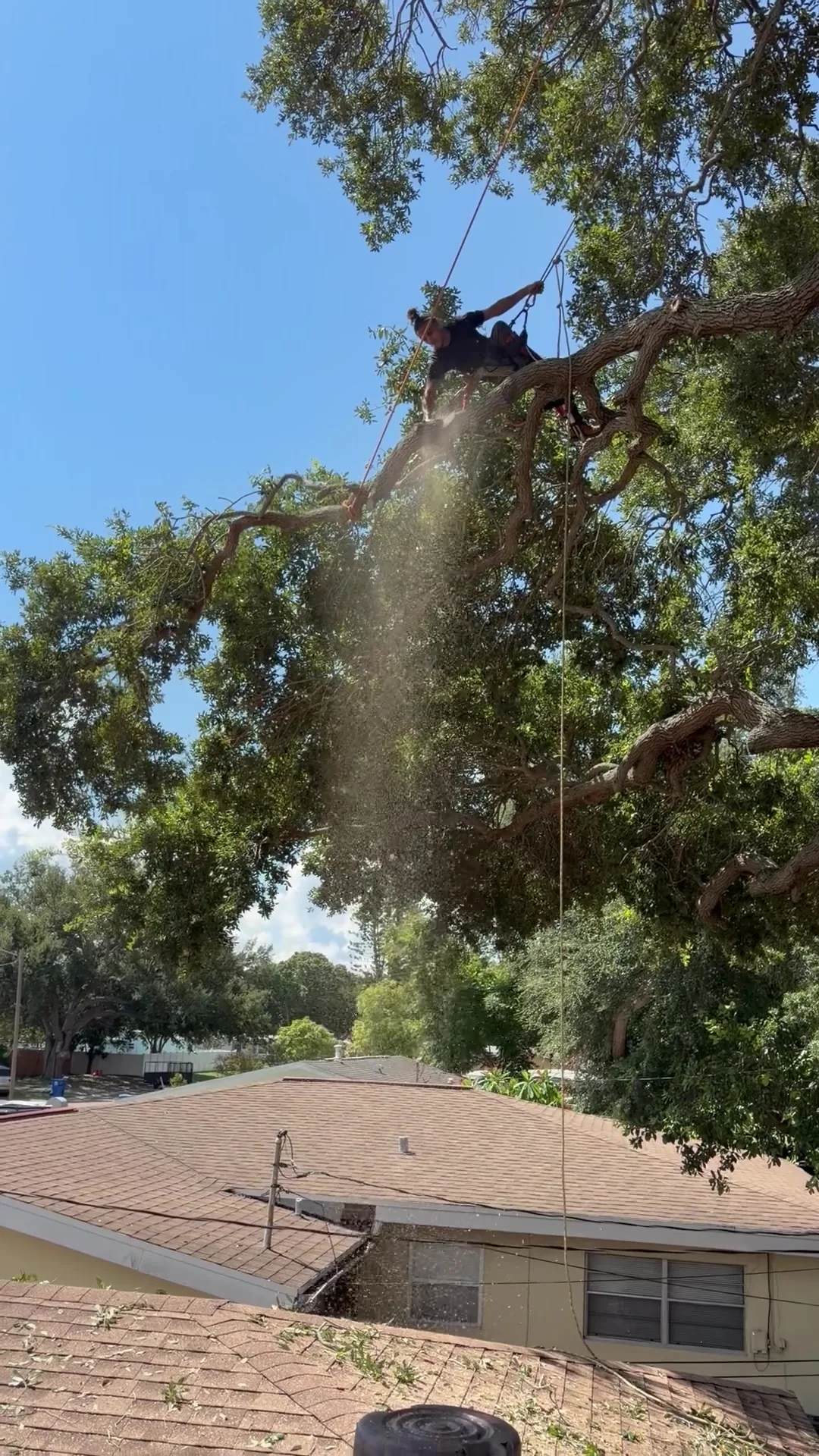
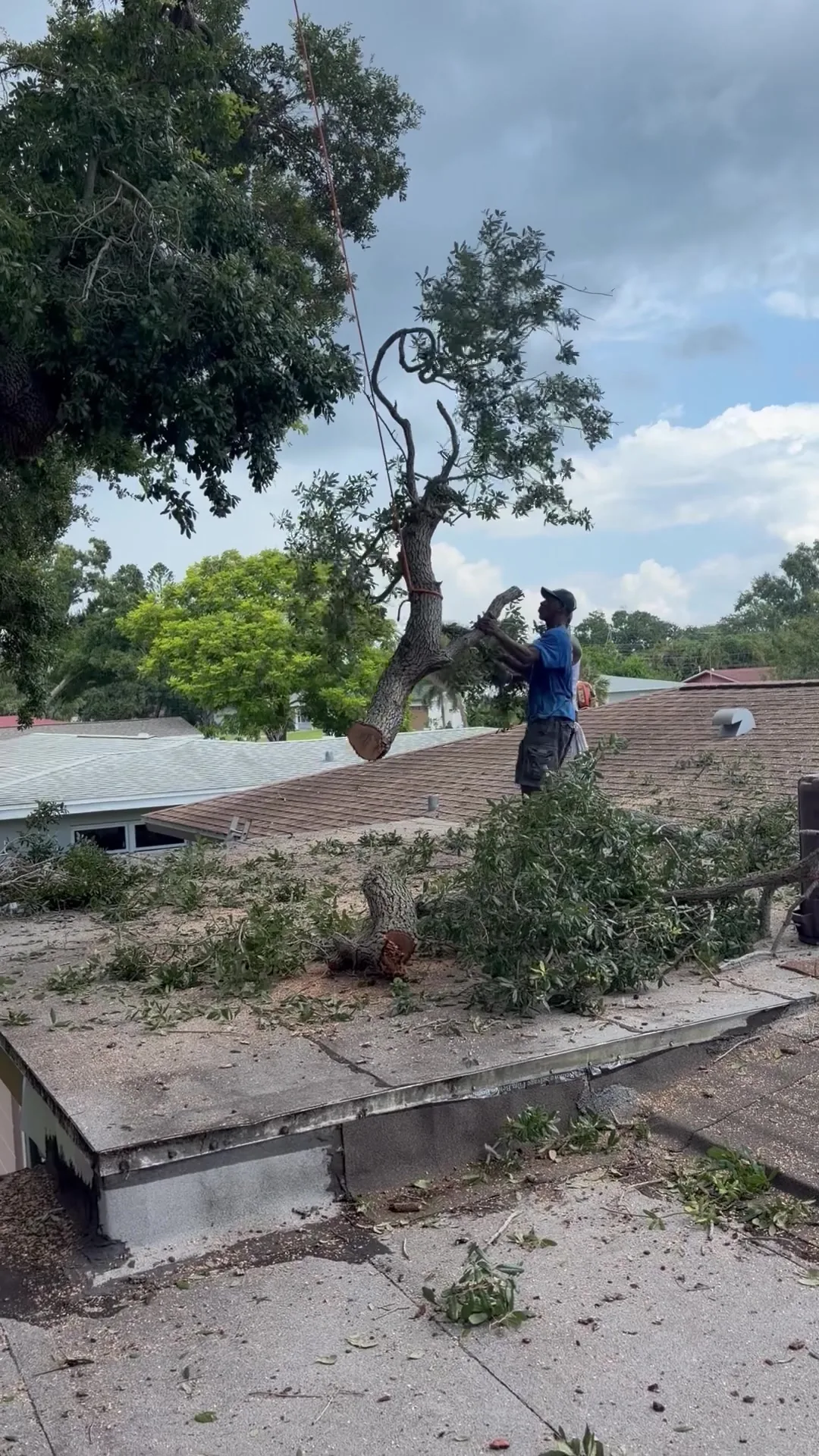
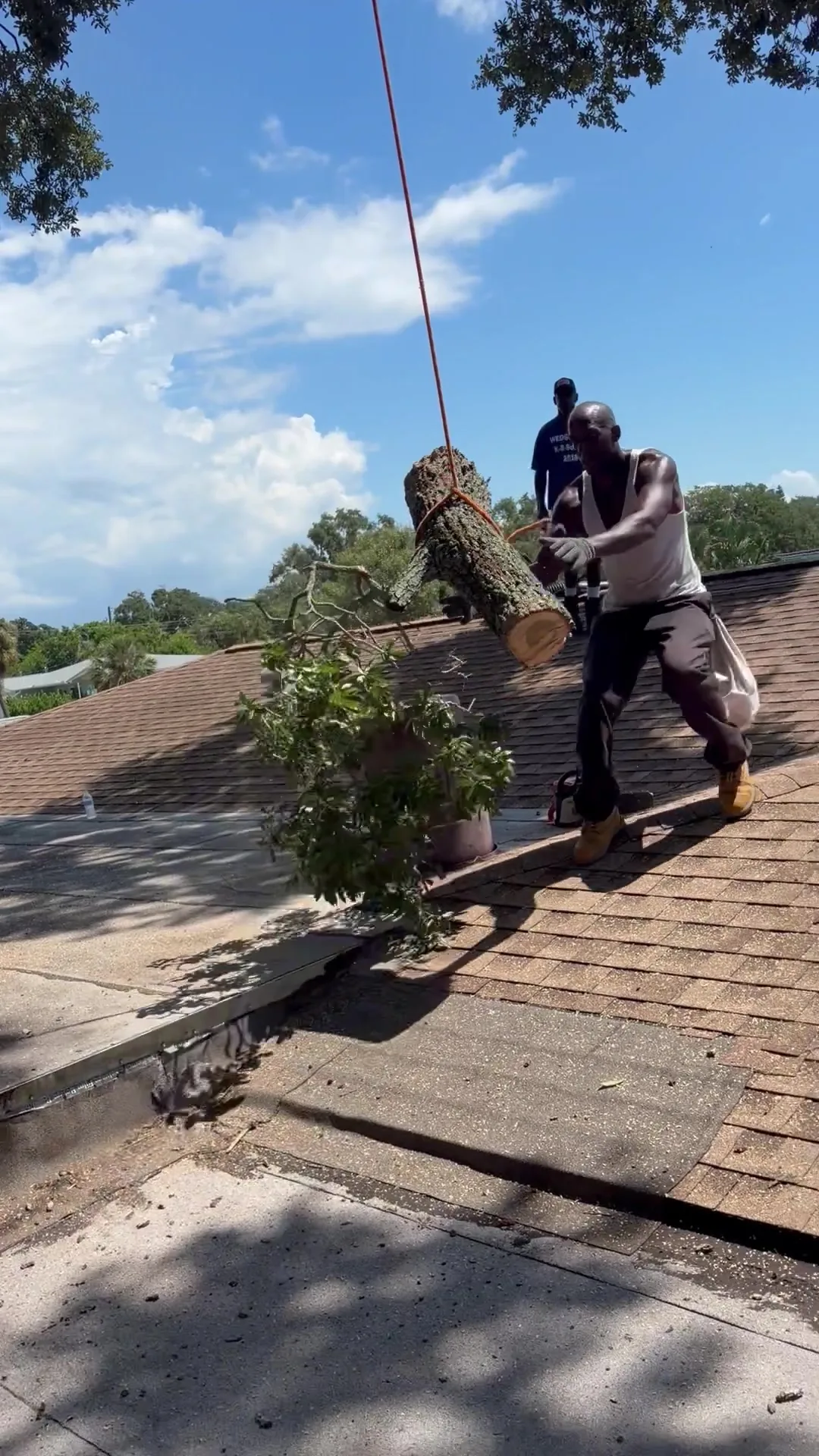
When a limb is over a structure, gravity is the enemy. A free-cut branch swings, twists, and lands where it wants. Rigging changes that: each limb is tied to a rope before the saw ever touches it, the cut is made, and the ground crew lowers the piece under control to a spot they choose. It takes longer than felling. It is the only right way to work over a roof.
How Kirby's Handled It
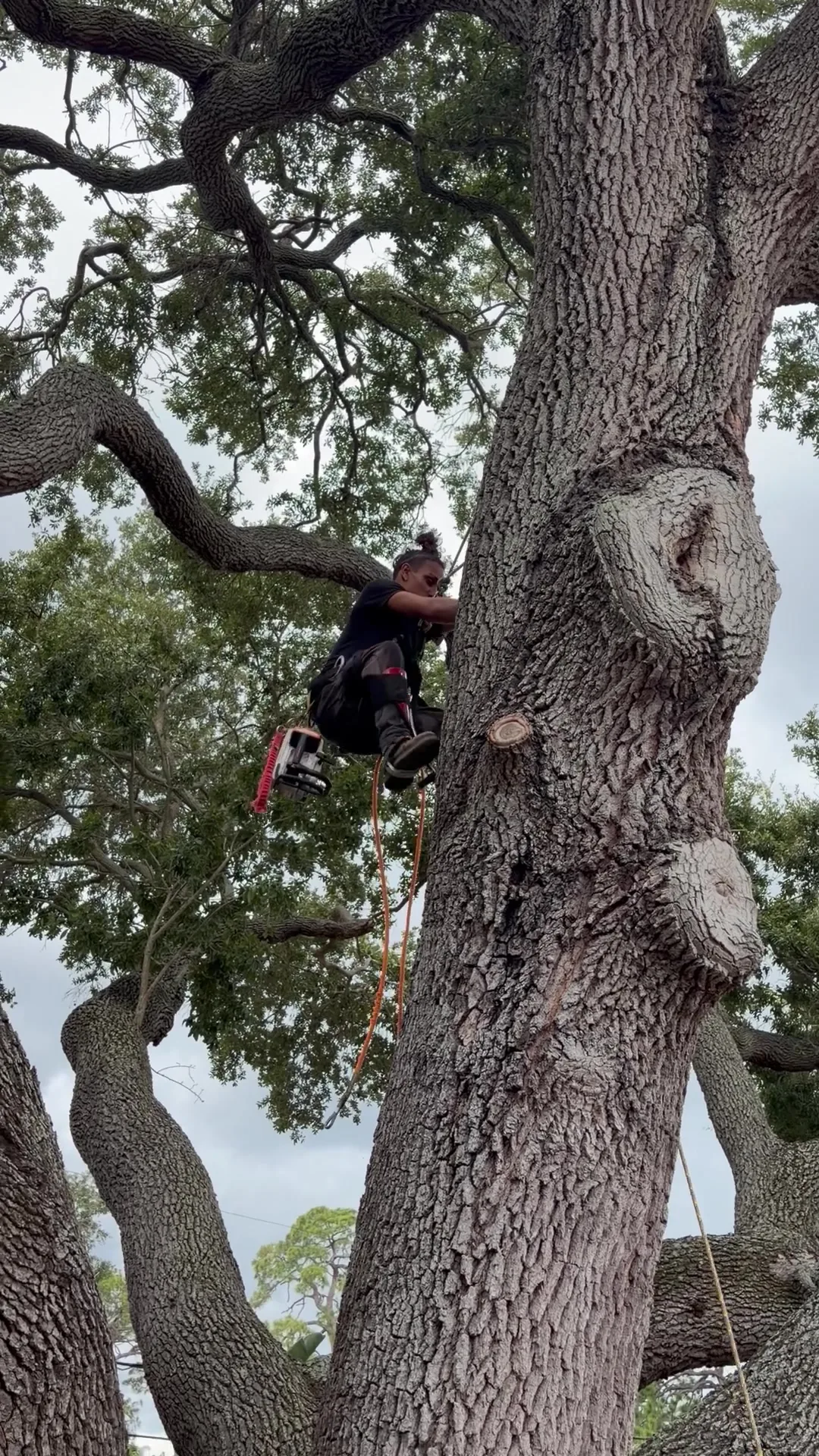
- Climber roped into the main union of the oak and worked outward along each overhanging limb.
- Crew stationed on the roof to receive and redirect each piece.
- Every limb tied off, cut, and lowered by rope — nothing free-fell.
- Larger sections rigged individually and lowered onto the roof, then carried to the edge and dropped to the ground.
- Roof swept of debris before the crew came down.
The Result
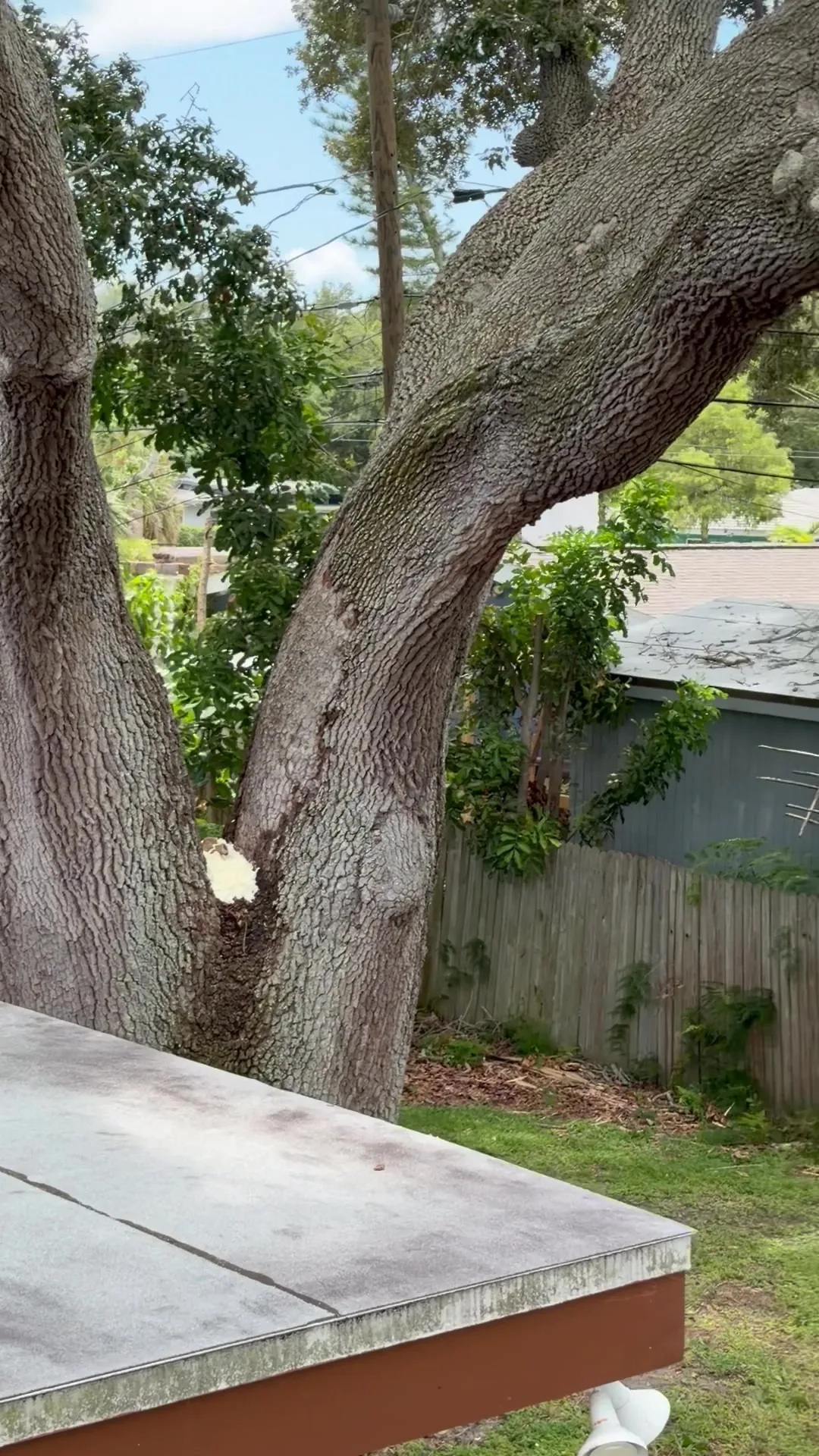
Overhanging limbs removed back to the trunk with clean pruning cuts. The tree stays. The roof is clear. No damage to shingles, gutters, or the structure.
When to Call
If you can see branches over your roof from the yard, they are already close enough to cause damage in a storm. The time to trim is before hurricane season, not after.
On the job