The Problem
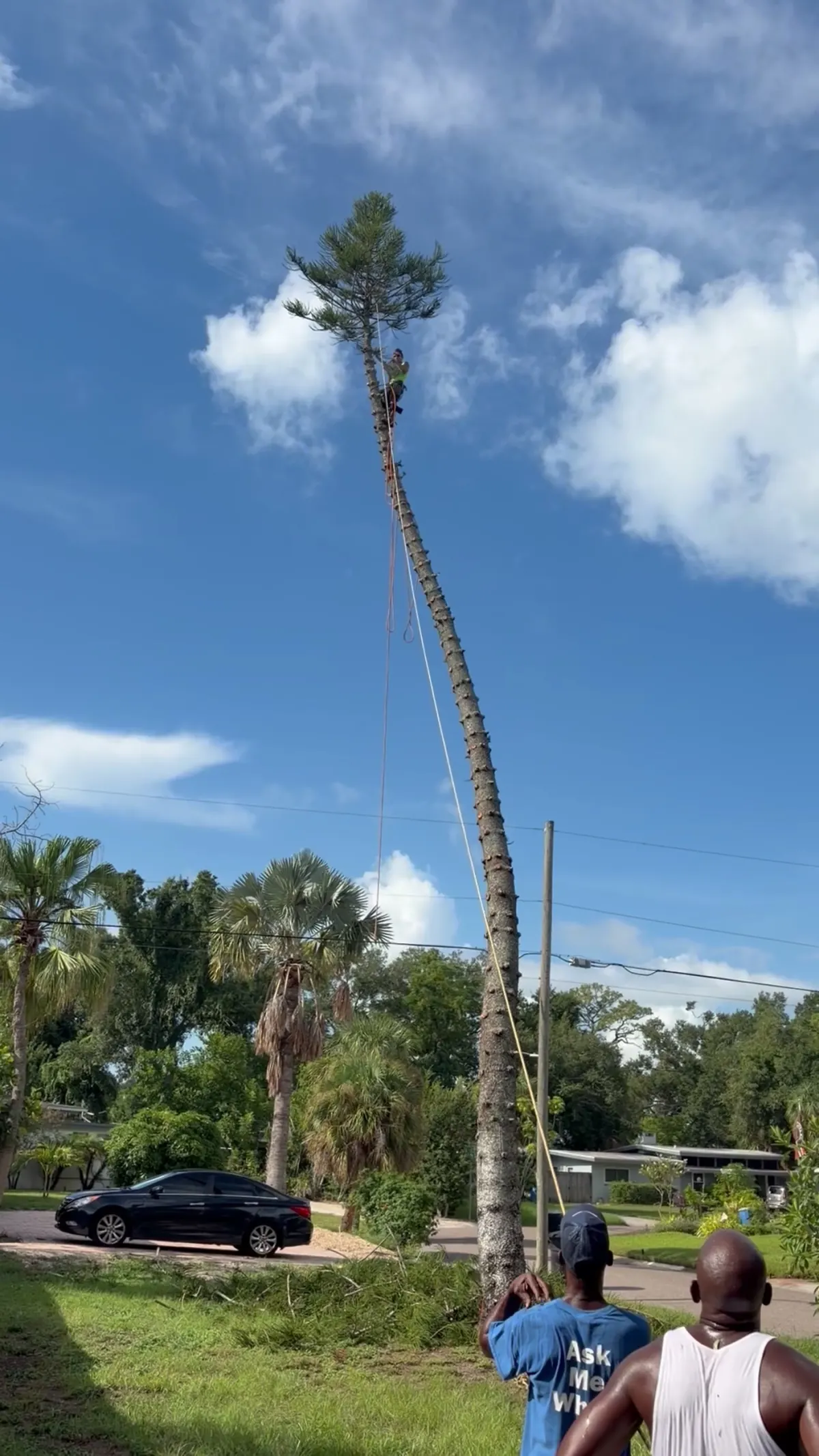
Two utility lines ran horizontally across the yard between the street and the house, passing near the trunk at working height. That alone rules out most of the easy options.
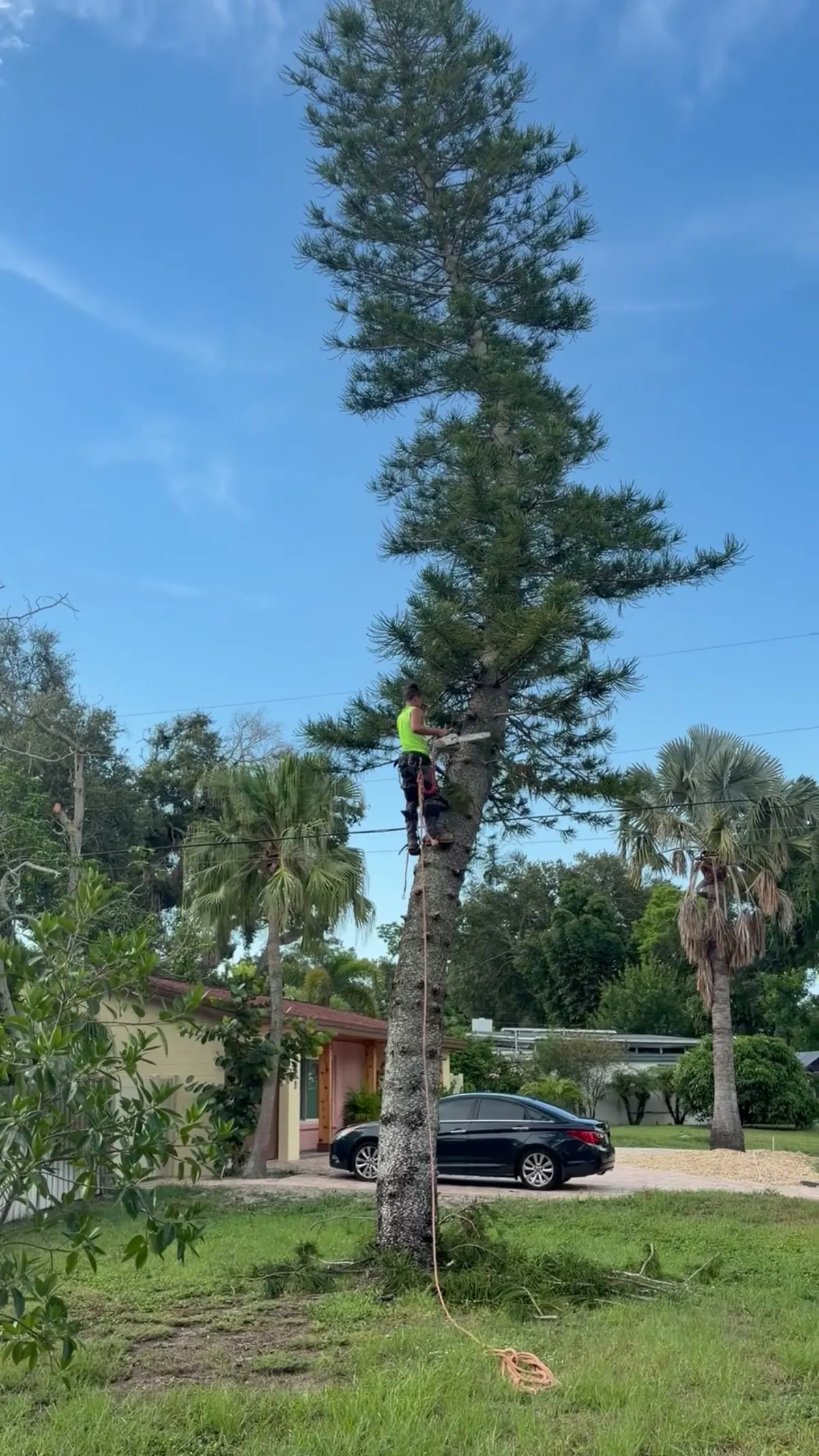
The rest of the site closed the box: the house and its covered entry sat immediately on one side of the tree, a paved driveway with a parked vehicle on the other, and fenced neighboring properties to the rear. A tall Norfolk Island pine stood in the middle of all of it, and there was no path to get a bucket truck anywhere near it.
Why It Couldn't Just Be Cut Down
A tree that size doesn't fall where you want it to — it falls where physics sends it. Lean, weight distribution, wind, and hidden decay all get a vote, and once it starts moving there are no corrections.
Here there was no safe direction for a felling cut at all. The house sat one way, the utility lines the other, and fences behind. Any full-length fall put something in the landing path. The only responsible way down was in pieces.
How We Did It
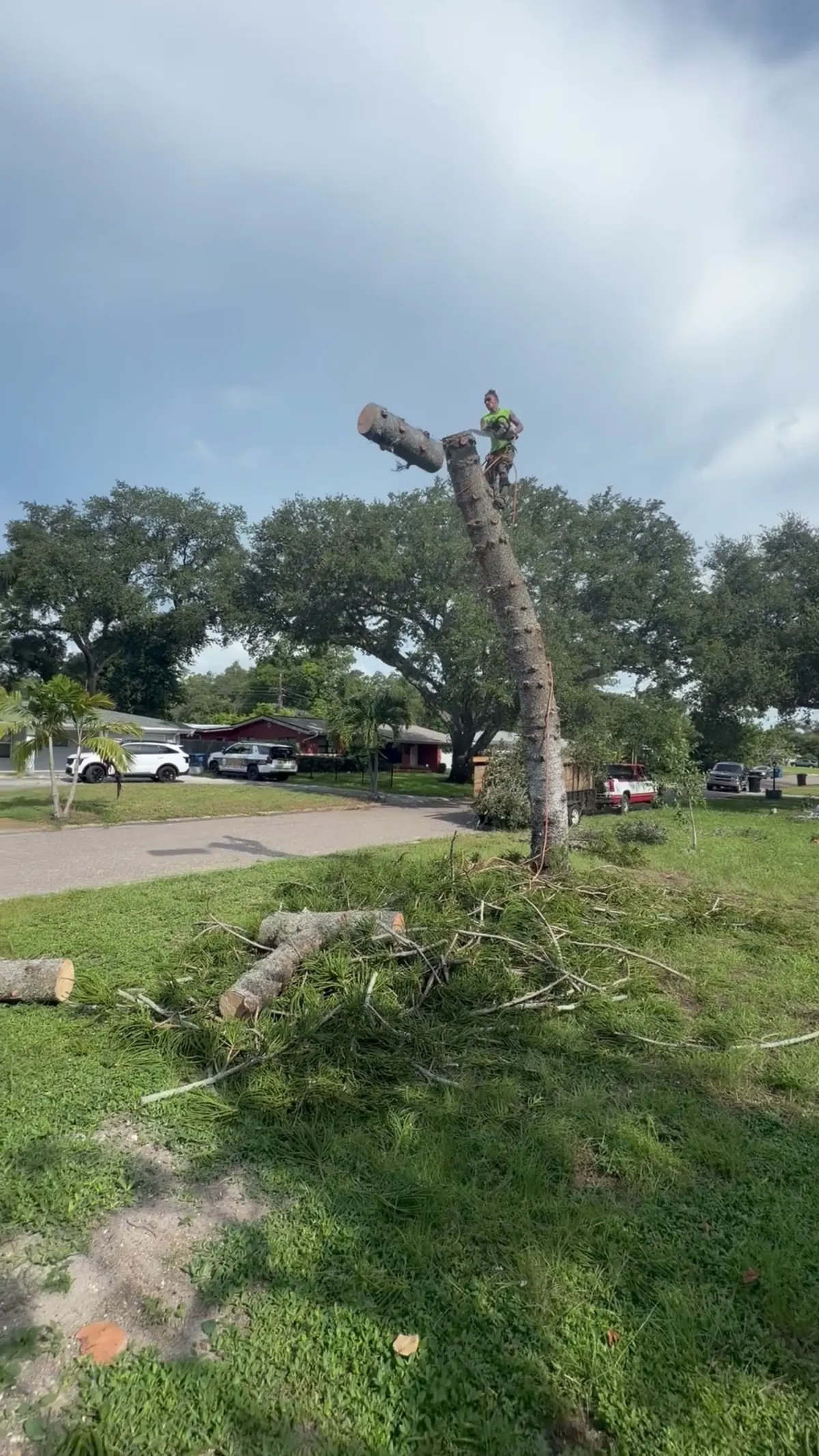
Our climber ascended the pine on rope and saddle and limbed the canopy in sections, working from the outside in. Each piece was rigged and lowered on a line to a controlled landing zone — not dropped — so nothing free-fell near the house, the driveway, or the lines.
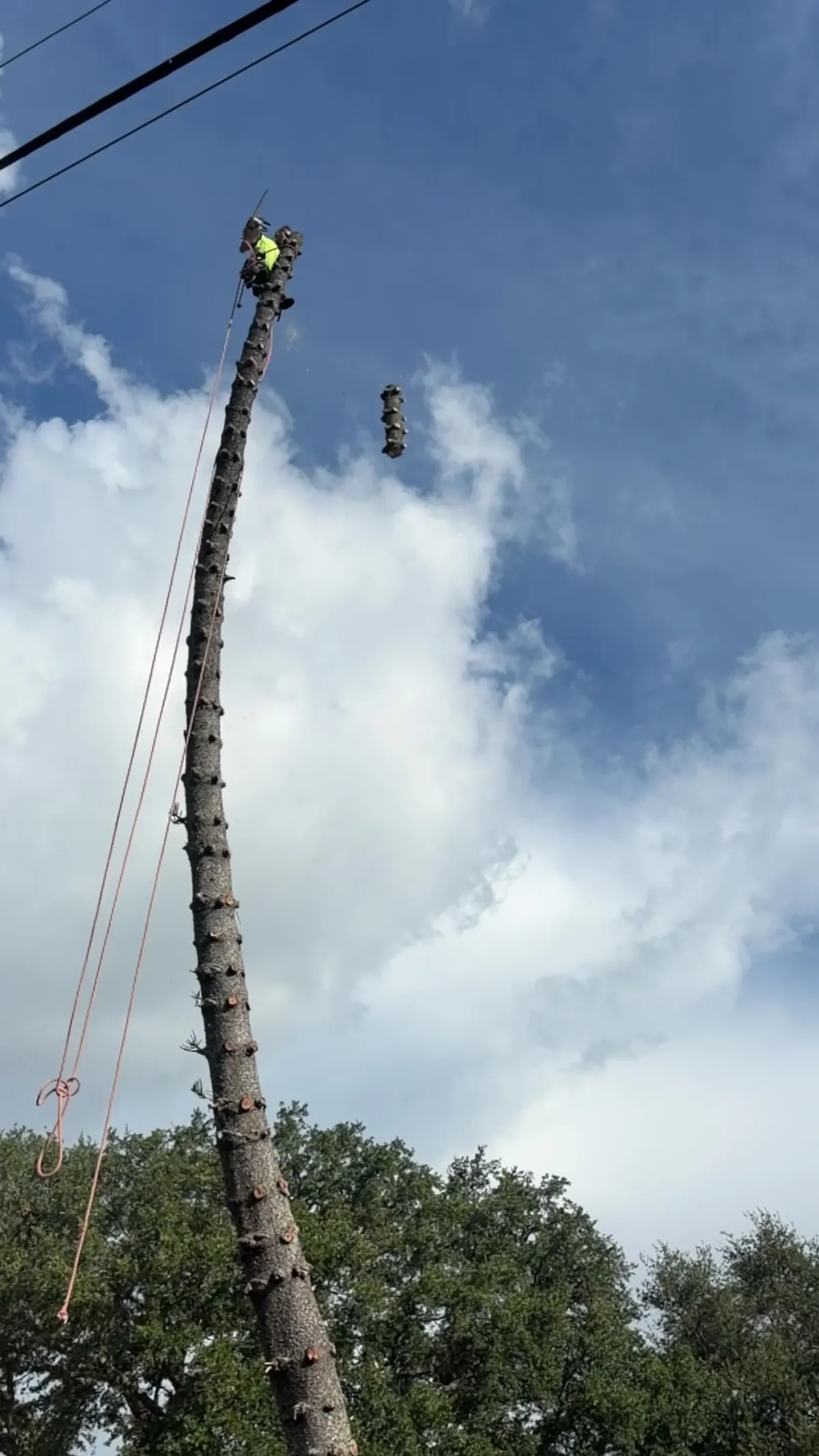
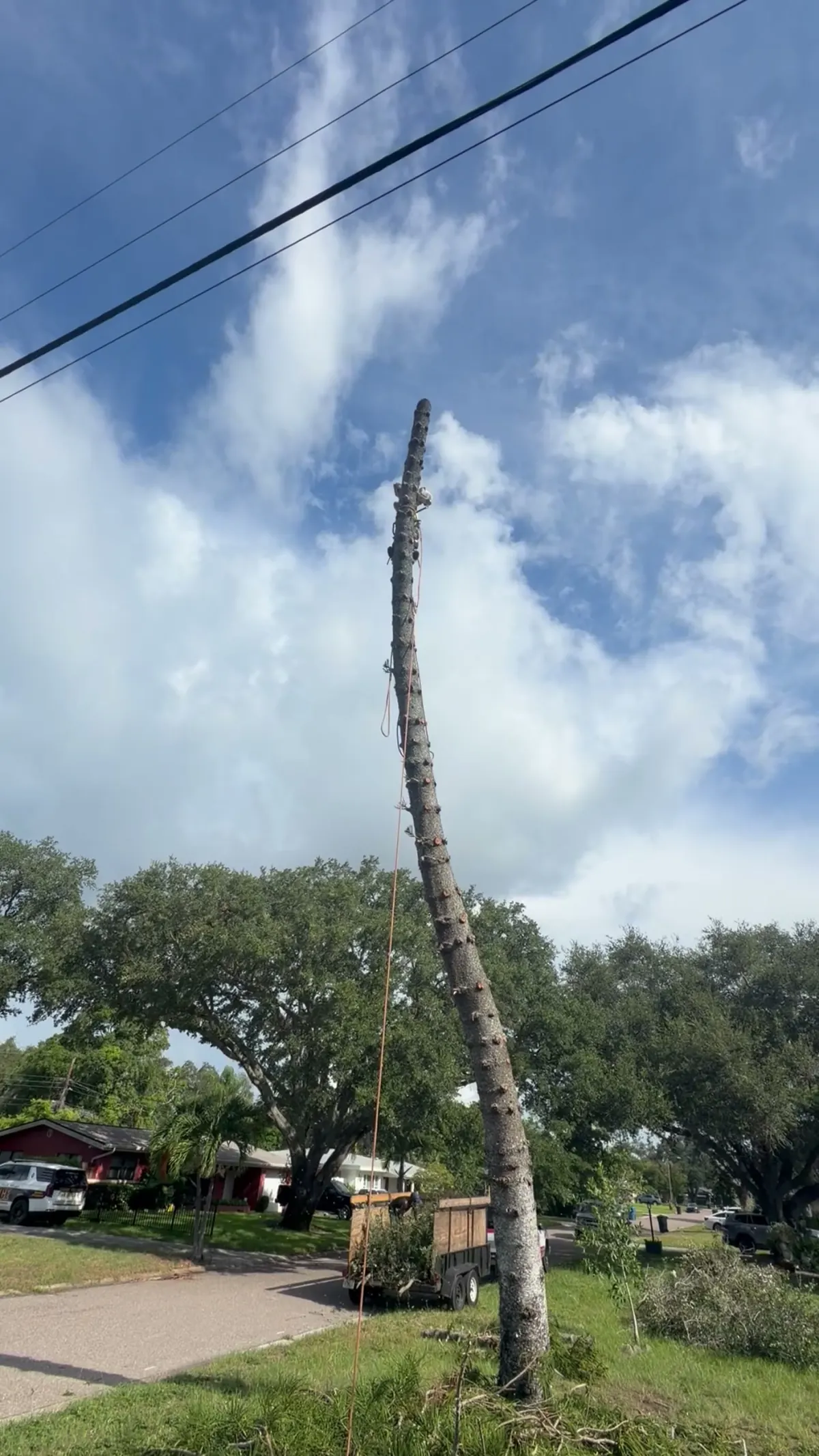
With the canopy off, the bare spar came down the same way: reduced in segments from the top, one manageable block at a time. Slow and deliberate is the whole point. Every cut had a plan, and every piece had a place to land before the saw touched wood.
Working Around the Lines
Kirby's assesses overhead hazards before any cut is made. On a job like this, the rigging is planned so that no section travels toward a conductor, and when a tree is close enough to the lines to require it, we coordinate with the utility before work begins.
One thing we tell every homeowner: never attempt tree work near overhead lines yourself. If a tree or limb is contacting a line, call your utility first — before calling anyone else.
The Result
The pine came down without incident. Debris was chipped and hauled, the yard left clear, and nothing on site was damaged — house, driveway, vehicle, fences, and lines all exactly as we found them.
That's what a technical removal should look like when it's done right: the only evidence we were there is that the tree isn't.
On the job